
The experiments
Five collections, one question each. Every image is drawn by a contract on Base and returned from tokenURI as a data: URI, so no server, file store or company has to stay alive for the token to keep its picture. All of it is CC0: take the images, remix them, mint them elsewhere. None of this is an investment, and ONE, the one that holds money, can lose it.
Faces
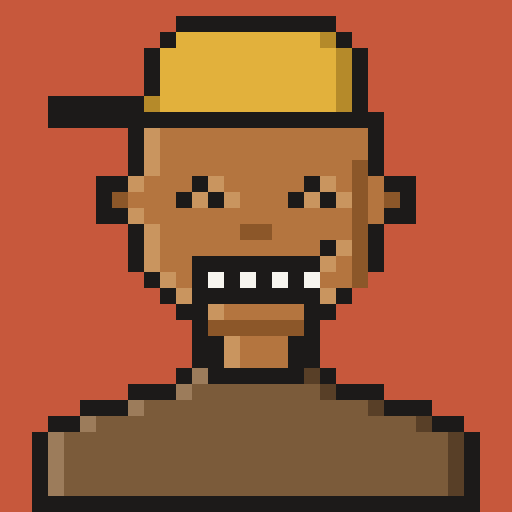
One pixel face per wallet each UTC day, free, while supply remains. You can pin up to 12 traits and colours for a fee that starts at 0.0005 ETH and doubles with every pin, up to 1.024 ETH for all of them, with 95 percent of the pin fee going to the author and 5 percent to the keeper. Rare and legendary parts come only from luck, and any roll can take a one of one from a pool that empties with the supply. The question: does a face you shaped yourself mean more to you than one you were handed? The collection ends at 10,000 faces.
ONE
A pixel coin that holds real USDC. You mint for 5, 10, 25 or 50 USDC, plus an ETH fee per coin for Chainlink VRF and network gas; the contract puts that USDC into a third-party lending vault on Base and your coin holds the shares. The art comes from a Chainlink VRF seed and an urn of 25,000 slots a series, 50 of them Master Coins, so paying more buys no better odds and a 5 USDC coin can be a Master Coin. Burn the coin after 30 days to redeem its vault shares at their current value, minus a 10 percent fee on the yield, which is the author's whole cut. The author also takes 100 founder coins a series, minted inside the first 1,000 positions with no backing until fees fill them. The question: does a picture change how you hold money? ONE can lose you money: if the vault is hacked, drained or frozen, the coins hold nothing and nobody makes it up; yield can be zero; there may be no buyers at any price; the odds that it earns you nothing are large. Put in only what you can lose, and read how it works first.
Knot
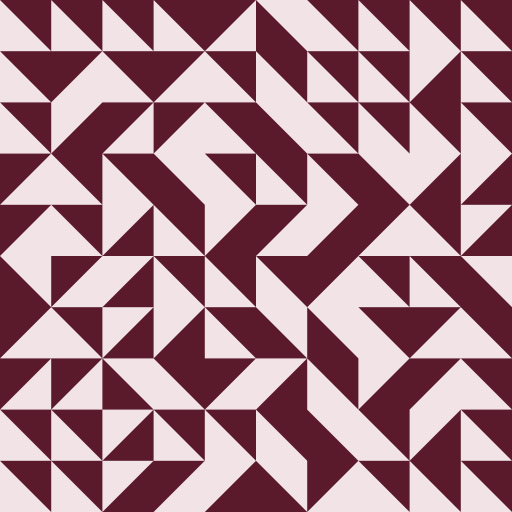
One Truchet knot a day, computed from the day number alone: sixteen palettes, ten traits, one grid of arcs and lines. Nobody picks the image and nobody can delay it. A day nobody claims stays empty for good, and the gaps are part of the work. The question: is a calendar a collection?
Blit
One remix a day of the 100 CC0 Blitmap originals: the composition of one with the palette of another, every pair once in 9,900 days. The question: what happens to a finished work when a clock keeps recombining it for 27 years?
Chain Run
One Chain Runner a day, drawn from the 338 CC0 Chain Runners layers with the original's own weight tables and thirteen draws seeded with the day. The question: can a collection that ended on Ethereum keep producing on Base without anyone at the wheel?
Rules the daily ones share
tokenIdequals the day number; day 1 was 5 September 2026; the day isblock.timestamp / 86400, rounded down.- 0 ETH mint fee, network gas only. No price, no royalties, no allowlist.
- Every tenth day up to day 1000 goes to the author. That is the whole cut, written into the contract on day one.
- A day nobody claims stays empty. It cannot be minted once the day has ended.
- They share one token contract, OneNFT.sol; only the renderer differs, and the author can swap a renderer for future days only.
Each site has a /how page that writes its draw out in full so you can port it, a /spec.json with the tables, and a JSON API. This page reads those; its own list is at /api/collections.json. The page borrows its colours from the knot of the day. There is no light or dark mode.
Questions
What is onenft.click?
Five small collections on Base, one author, one question each. The images, the rules and the contracts sit on the chain. All of it is CC0.
Where does the image live?
In the contract. Call tokenURI and you get the SVG back as a data: URI. No server, no IPFS pin, no company has to outlive the token for the picture to stay.
What does it cost?
Knot, Blit and Chain Run cost network gas and nothing else. Faces costs gas, plus a fee only when you pin traits. ONE costs the backing you choose, 5, 10, 25 or 50 USDC, plus an ETH fee per coin that pays Chainlink for the random seed, plus gas. The current fee is shown in the mint form before you sign.
Can I lose money on ONE?
Yes. Your USDC sits in a third-party lending vault; if that vault is hacked, drained or frozen, your coin holds nothing and nobody makes it up. Yield can be zero. Buyers may never come, at any price. The odds that ONE earns you nothing are large. Put in only what you can lose.
Why does a day stay empty?
A daily token can be minted only on its own UTC day. When the day ends unclaimed, that number stays empty for good. You see the gaps on every calendar; they are part of the work.
What does the author keep?
On the daily collections, every tenth day up to day 1000. On Faces, the pin fees. On ONE, 10 percent of the yield and 100 founder coins a series that start with no backing. No royalties anywhere, and no other cut.
Can the author change my token?
No. Each token records the renderer it was minted with, and a new renderer reaches future tokens only. The daily contract has no other admin function. ONE's contract has no pause, no upgrade and no path to a holder's money; its owner can set a renderer for future coins and take fees the contract already set aside.
How is randomness made?
The daily collections use the day number and nothing else, so you can compute tomorrow's image today. Faces mixes in the hash of a block after your commit. ONE asks Chainlink VRF for a seed and draws the art slot from an urn, so nobody, the author included, can pick who gets a Master Coin.
What can I do with the images?
Anything. CC0 means print them, remix them, sell the prints, mint them elsewhere. No credit needed, no permission to ask.
Is this an investment?
No. Nothing here promises a return. There are no royalties, no roadmap and no buyback. A token can be worth zero for as long as it exists.
How do I see what a wallet holds?
Open /wallet here for every collection at once, or each site's /yours page. Viewing needs no signature and no transaction.
Can I start my own?
Yes. Take the token contract below, write a renderer, point the site code at it. If you ship one, say so and it can be listed here.
Start one
Take the token contract, write a renderer, and point the site code at it. The 3 daily repos above are the worked examples. If you ship one, say so and it can be listed here.